Scaling paid ads in a SaaS company is rarely straightforward. You are not just optimising for purchases. You are optimising for trials, demos, qualified pipeline, and long-term recurring revenue. Attribution is more complex. Sales cycles are longer. And mistakes get expensive fast.
Because of this, SaaS companies often look for specialised software and tools to either help them run ads better, understand performance more clearly, or structure their acquisition strategy properly from the start.
Some platforms focus on education and frameworks. Others focus on automation, experimentation, or attribution. The right choice depends on where your team is stuck. Below are 9 SaaS paid ads software tools that help solve different parts of the growth equation.
TL;DR: Best SaaS Paid Ads Tools at a Glance
If you just want the highlights, these four tools stand out depending on what part of the SaaS paid acquisition stack you want to improve:
• SaaS Ads Studio: Best for learning how to run SaaS paid ads properly and building a structured acquisition system without relying on agencies.
• AdManage: Best for launching and managing large batches of ads quickly, making it ideal for teams running frequent creative tests at scale.
• Able CDP: Best for improving tracking accuracy with server-side conversion data and stronger attribution across the full customer journey.
• Metadata.io: Best for automating paid campaign experimentation and optimising ads toward pipeline and revenue rather than basic campaign metrics.
1. SaaS Ads Studio
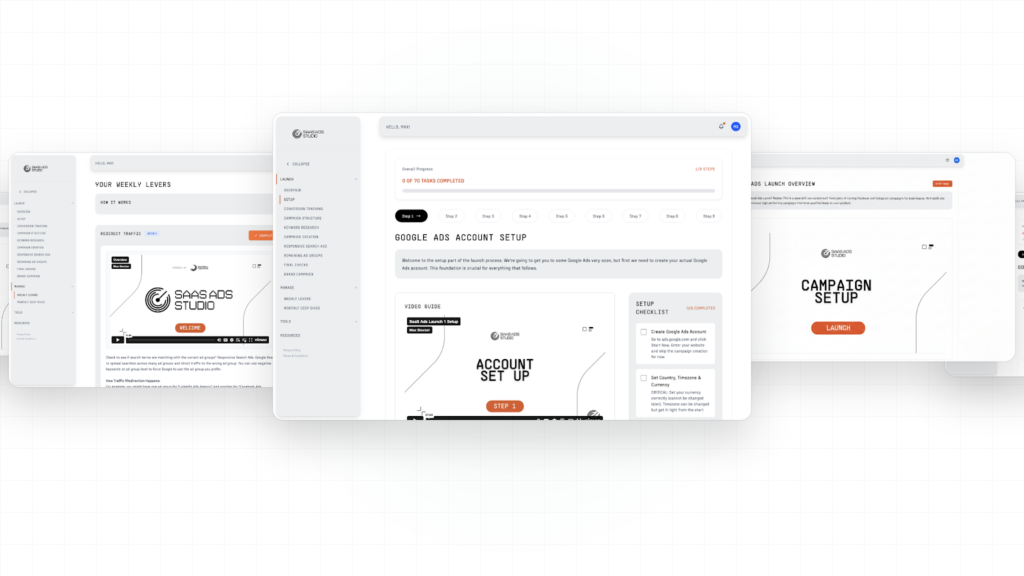
SaaS Ads Studio is designed for SaaS founders and marketers who want to run paid ads properly without relying on agencies. It functions as a structured training and implementation platform that walks you through how to set up, launch, and optimise Google Ads and Facebook campaigns from the ground up.
Instead of being a tool that runs campaigns for you, it teaches you how to think about SaaS paid acquisition strategically. This includes how to structure accounts, build audiences, craft messaging for different funnel stages, and track performance in a way that aligns with revenue.
For early-stage SaaS teams or bootstrapped founders, this kind of guided framework can prevent common mistakes. Many companies waste budget because they apply ecommerce style tactics to SaaS funnels. SaaS Ads Studio focuses specifically on SaaS buyer journeys, demo funnels, and subscription economics.
It is especially useful for teams that want to keep paid acquisition in-house but do not yet have deep expertise. Instead of guessing or relying on scattered tutorials, they can follow a structured roadmap tailored to SaaS growth.
Why They Stand Out
• Guides SaaS teams through a full pay-per-click setup, including Google and Meta, with structured weekly optimisation checklists that keep results compounding.
• Uses AI-powered brand and keyword analysis to generate tailored campaign assets and keyword clusters based on your product’s positioning and audience.
• Combines education and execution so teams build practical skills while launching and managing real campaigns, reducing dependency on expensive agencies.
• Starts at an accessible price point compared to hiring a specialist agency
• Includes a wide range of tools and resources designed for SaaS paid acquisition
2. AdManage
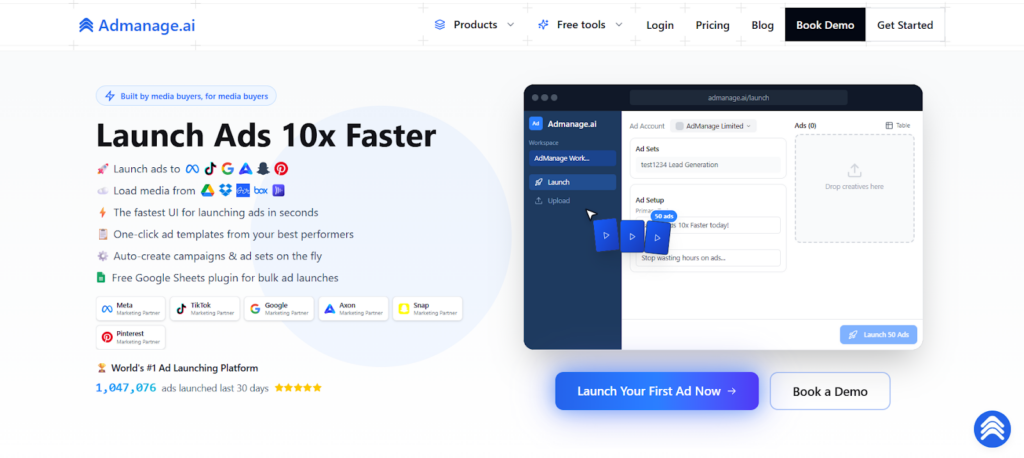
AdManage is a platform designed to remove one of the biggest bottlenecks in performance marketing: the time it takes to launch ads. Instead of spending long periods preparing campaigns manually, the tool allows advertisers to move from creative assets to live ads much faster.
The platform is particularly useful for teams running frequent creative tests. Advertisers can upload multiple creatives at once, organise campaigns in a structured interface, and launch large batches of ads in a single workflow. This makes it far easier to run large testing cycles without spending hours preparing campaigns.
AdManage is also built with control in mind. Marketers can manage campaign settings more consistently and avoid unwanted automated adjustments that sometimes appear during the ad setup process. This helps teams maintain cleaner campaign structures when launching ads at scale.
Another advantage is how easily teams can manage creative assets. Advertisers can import creatives directly from platforms like Google Drive or Dropbox and quickly prepare them for launch. Combined with reusable copy templates and support for multiple ad formats, this makes the tool well-suited for high-volume ad production. For agencies and growth teams that regularly launch large numbers of Meta ads, AdManage provides a faster and more organised way to move from campaign planning to live ads.
Why They Stand Out
• Launch hundreds of ads in minutes: Bulk workflows dramatically reduce the time required to prepare and launch campaigns.
• Spreadsheet-style campaign editing: Manage and edit many ads in one place without jumping between multiple setup screens.
• More control over campaign settings: Disable unwanted automated enhancements and keep launch settings consistent.
• Built for high-volume creative testing: Quickly launch different formats and aspect ratios to test more creatives at scale.
3. Able CDP
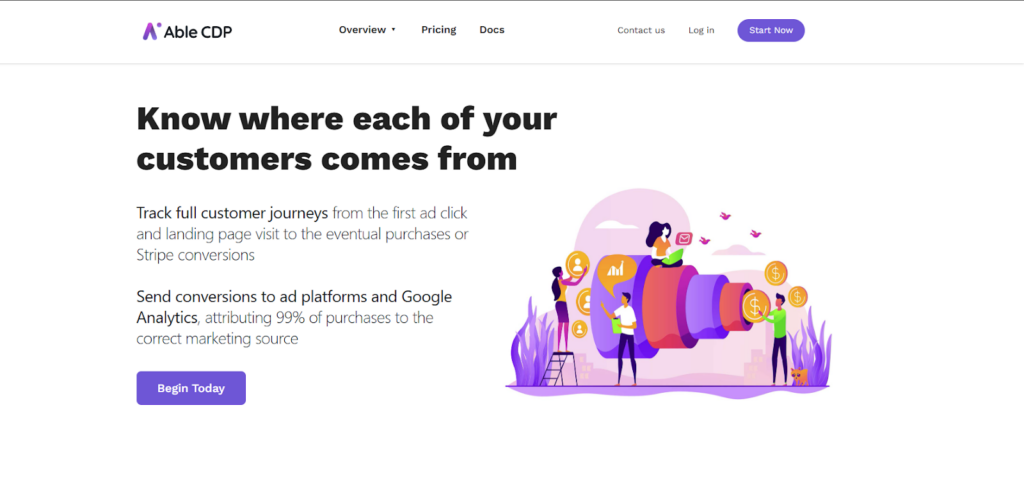
Able CDP is a server-side tracking and marketing attribution platform built to improve data accuracy in paid campaigns. As tracking becomes less reliable due to privacy changes and browser limitations, many SaaS companies end up optimising campaigns with incomplete conversion data. Able focuses on fixing that problem at the infrastructure level.
By combining client-side and server-side tracking, Able captures the full customer journey from the first ad click through to Stripe purchases and subscription revenue. It then sends accurate server-side conversions directly into platforms like Meta, Google Ads, and TikTok through API integrations.
The result is cleaner attribution and stronger optimisation signals for ad algorithms. For SaaS companies investing heavily in paid acquisition, better data quality can directly impact performance, especially when high-value conversions happen days or weeks after the initial interaction.
Able is best suited for SaaS teams that want to strengthen their tracking foundation and ensure their ad platforms are learning from complete, revenue-based data rather than partial signals.
Why They Stand Out
• Combines client-side and server-side tracking for higher conversion accuracy
• Sends real server-side purchase data into Meta, Google, and TikTok through API integrations
• Tracks Stripe and subscription revenue back to the original ad click
• Improves algorithm learning by feeding platforms cleaner and more complete signals
4. HockeyStack
HockeyStack is built specifically for B2B SaaS attribution. Its main focus is revenue level visibility. SaaS buying journeys often involve multiple touchpoints across weeks or months. Relying on last click attribution can lead to misleading conclusions about what is actually driving revenue.
HockeyStack supports multi-touch attribution models and tracks account-level engagement across channels. It connects marketing activity to CRM outcomes so teams can see which campaigns influence the pipeline and closed deals. That level of visibility becomes especially valuable when revenue per deal is high and marketing spend needs to be justified against pipeline impact.
Why They Stand Out
• Built specifically for B2B and SaaS revenue attribution
• Tracks account-level journeys instead of single user clicks
• Supports multi-touch attribution models tailored to long sales cycles
• Requires minimal engineering resources to get started
5. Dreamdata
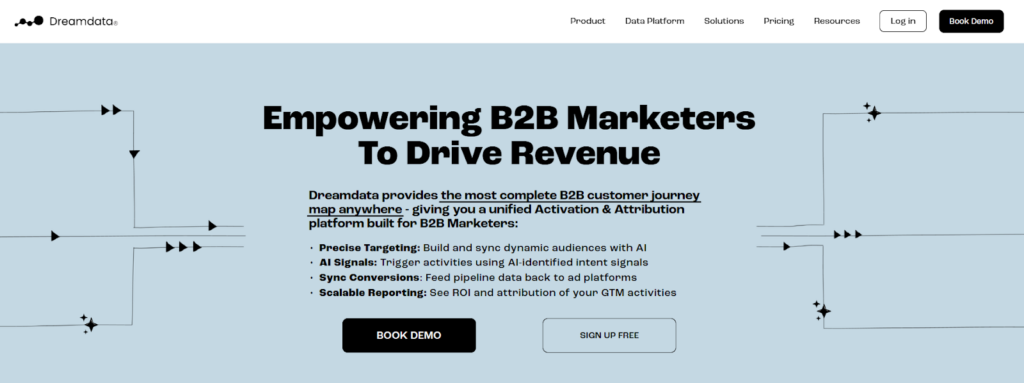
Dreamdata is another revenue attribution platform tailored specifically to B2B SaaS. It gathers data from your website, CRM, ad accounts, and marketing tools to build a comprehensive view of the customer journey. What makes it valuable is the ability to tie marketing investments directly to the pipeline and revenue.
This is especially important for SaaS teams reporting to leadership or investors who expect a clear return on investment. Rather than optimising campaigns in isolation, Dreamdata helps you evaluate performance based on actual business impact.
Why They Stand Out
• Maps complete B2B customer journeys from first touch to closed revenue
• Syncs revenue and pipeline data back into major ad platforms
• Allows comparison across multiple attribution models
• Designed for sales-led SaaS teams reporting to leadership
6. MadKudu
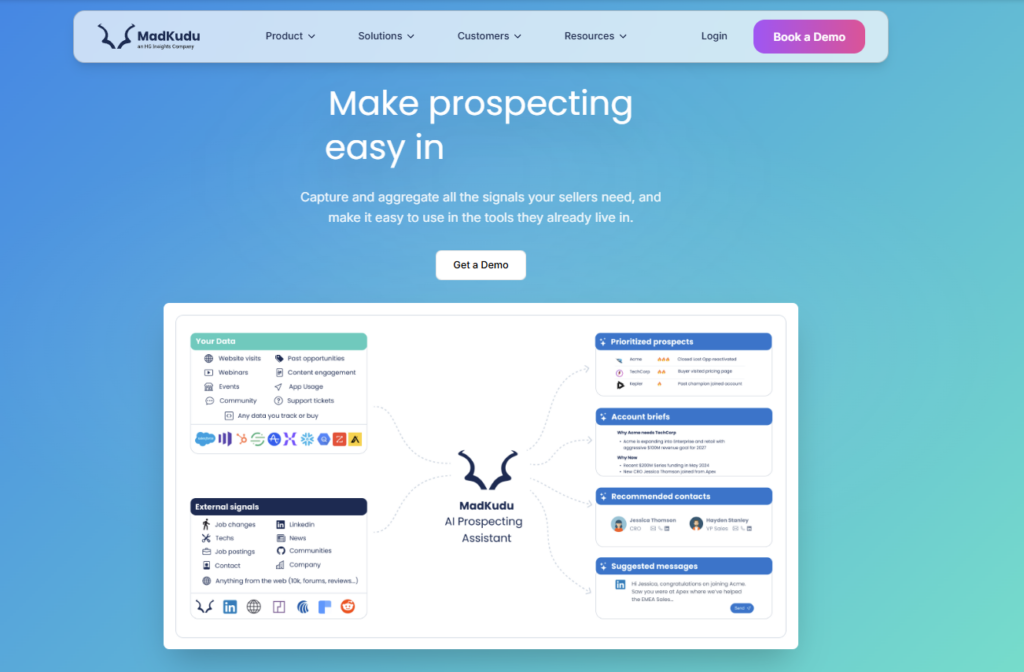
MadKudu focuses on predictive lead and account scoring. It uses data modelling to identify which prospects are most likely to convert into paying customers. In paid advertising, this becomes powerful when syncing high-scoring audiences back into ad platforms. Instead of targeting broad segments, you can focus spend on accounts with a higher probability of closing.
Why They Stand Out
• Uses machine learning to score leads based on fit and intent
• Incorporates product usage data into lead scoring models
• Continuously updates scores as prospects engage
• Helps push high probability accounts into paid audience segments
7. Clearbit
Clearbit enhances lead and account data with firmographic information such as company size, industry, and estimated revenue. This enrichment allows SaaS marketers to build more precise audiences and personalise messaging.
In B2B SaaS, targeting the wrong company size or industry can dramatically affect performance. Clearbit helps refine segmentation, so campaigns are aligned with your ideal customer profile.
Why They Stand Out
• Enriches leads and accounts with firmographic data instantly
• Identifies anonymous website visitors through reverse IP matching
• Enables highly specific audience segmentation by company size or industry
• Strengthens account-based marketing campaigns
8. HubSpot Marketing Hub
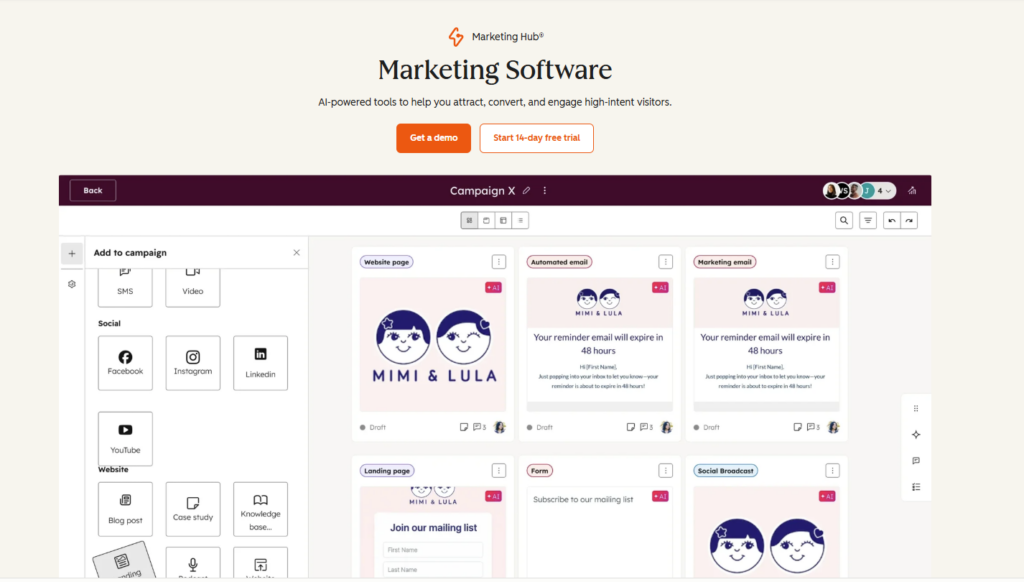
HubSpot Marketing Hub often serves as the operational core for SaaS marketing teams. It connects paid advertising with CRM data, email automation, and lifecycle tracking. Through built-in ad integrations, teams can see how paid campaigns influence contacts over time and how those contacts move through the funnel.
This creates better alignment between marketing and sales. Teams already operating inside HubSpot often expand into Marketing Hub to keep campaign tracking unified instead of adding another disconnected tool.
Why They Stand Out
• Natively connects paid ads, CRM, and marketing automation
• Tracks paid leads across lifecycle stages automatically
• Includes predictive lead scoring within the platform
• Provides revenue reporting tied directly to campaigns
9. Metadata.io
Metadata.io is a platform built to automate and scale paid social experimentation, particularly for B2B SaaS companies. One of the biggest challenges in SaaS advertising is testing efficiently. It is not enough to try one audience and one creative angle.
High-performing campaigns usually come from structured experimentation across messaging, targeting, and creative formats. Metadata allows teams to run systematic experiments at scale while integrating performance data back into their CRM.
This shifts the focus from basic campaign reporting to understanding how paid media actually contributes to pipeline and revenue. Metadata is particularly useful when testing speed becomes the limiting factor in growth and internal teams need structured experimentation without adding operational overhead.
Why They Stand Out
• Automatically launches and optimises paid campaigns across LinkedIn, Meta, and Google
• Uses your ideal customer profile data to dynamically build better-performing audiences
• Runs continuous multivariate testing to surface winning creative and messaging faster
• Connects ad performance directly to pipeline data inside your CRM
Choosing the Right SaaS Paid Ads Software for Your Growth Stage
SaaS paid ads software comes in different forms. Some platforms teach you how to build and manage campaigns yourself. Others automate experimentation. Some focus entirely on attribution and revenue visibility.
The right choice depends on your internal capabilities and your biggest constraint. If your team lacks strategic knowledge, a structured training platform can prevent costly mistakes. If experimentation speed is the bottleneck, automation tools may help. If attribution feels unclear, investing in data infrastructure might deliver the highest return.
Paid acquisition in SaaS is not just about launching ads. It is about building a system that connects traffic, product engagement, sales activity, and revenue. When your tools support that full journey, scaling becomes far more predictable.